


Stephen Hill's website
Printed from: srhill.info
The 'R' word
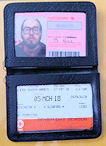
I remember the day that I first walked into the office. I remember the oak beams that I had to duck to avoid. I remember the cubicles with their sides covered with grey cloth that had been stained in unexpected ways, as if they had been the victim of a series of explosive coffee spills. I remember Sandra, John, Howard, Gary, Graham, Gordon, Simon, Louise, John the bruce, and Phil the boss. I remember Rosemary at the reception and Marion who I'd been hired with, and who'd ended up in an even clunkier office down the hall. I remember the ridiculously steep stairs that led to the kitchen, and the occasional crashes when people fell down the things carrying tea trays, surviving with minimal damage because they had only a tiny amount of room to drop before they hit the back wall.
Twenty years later, I was working for the same company, in a different and snazzier office and with a largely different bunch of people. Of my original colleagues, only Simon, Graham, John and Marion were still around. Sandra had left about a year after I'd started. Rosemary had died in tragic circumstances. The others had left for new lives and new careers. At fifty-six, I was expecting to retire there. I'd survived the recession and the company seemed to be doing well. I was getting generous bonuses, the pay was decent, and the holiday entitlement was great.
My first indication that my life was going to change was in August of 2017, when the head of the department walked into the office looking incredibly haggard and exhausted. He didn't give any indication of what was bothering him, and I wasn't the only one who noticed, but I assumed that he had some sort of personal issue that he didn't want to talk about.
I discovered the truth in October, when an email arrived informing us of an all-hands briefing that would be broadcast in the conservatory. My manager had no idea of what it was about, but it seemed to be important. There was a lot of speculation about what was actually happening, and it was noticed that strange people were arriving to set up the broadcast. When the moment came, the announcement shouldn't have been remotely unexpected, but it was still a huge surprise. We were being taken over by a large American company who we'd never, ever, heard of.
In mid-November, my department was reorganised. When my fellow technical author looked at the new organisation chart, she spotted that neither of our names had been included. Apologies were made, as it had apparently all been an oversight. My manager then explained that our new owners did employ technical authors, but that they didn't employ them in the Professional Services department. She also told me that my colleague and myself had very different roles, sounding distinctly sad when she said that. I could appreciate her point. I'd spent most of my years in the Development department, but I'd been moved to Professional Services a few years previously, and I'd found myself spending less of my time writing and more of my time working on web development stuff. Now that we were part of larger company, the web development work was likely to dry up, and I knew that it was going to be hard to justify my role as a full time technical author. But I was still busy for the moment, and I was hoping that my expertise with the software's help files would be important enough for me to keep my job. I didn't want to leave.
We'd been told that we'd learn about any possible redundancies in the first months of 2018, so we kept our heads down and tried to keep working as normal.
The bombshell came at the end of January, when we were summoned to another all-hands meeting. After the CEO provided us with a short summary of how well the company had been doing over the previous year, none of which we particularly cared about, he finally informed us that the company would be making some of us redundant. Everyone in the original company would be affected except for the Sales department, and we'd receive an email listing the number of potential redundancies in each department by the end of the day. When the email arrived, the scale of redundancies was a lot worse than we'd feared, with a potential cut of twenty-five percent of the existing staff. The redundancy decisions were going to be made using a points scoring system, with our managers awarding us points for the quality of our work and our commitment to the company. However, the scores were going to be weighted according to the individual's role, so most of us assumed that the scoring exercise was irrelevant.
During this process, the company was attempting to continue with the assimilation as best it could, and a few weeks before the announcement of who was going to lose their jobs, we found ourselves attending a bizarre "Spirit week" with prizes for the best workers and a tonne of free food. It didn't do a damn thing for morale and it was boycotted by a significant number of people, but most of us turned up to the meetings, ate the food and waited for the bad news.
An email was sent telling us that if we didn't hear that we were going to be made redundant by the end of the week, we were probably going to be safe. We spent the rest of that week worrying for our jobs and struggling to motivate ourselves to continue working. Friday was quiet to say the least. Given that our new head office was in the US, we expected that the redundancy notices would go out in the later part of the afternoon. It was one of the most stressful times in my entire life, and I spent most of the day in a fog of anxiety. I checked my emails every few seconds, and at around 15:20, I received an email, telling me that I had been potentially selected for redundancy. I then discovered that my colleague sitting next to me had received the same email. Francis had been with the company for less than a year and he was a talented guy, so I felt his loss deeply. He'd also been made redundant four times previously, and he later told me that the fifth had been his worst experience yet. Another guy, Ian, who I'd known, liked, and respected for over twenty years, was also on the list, as was Andy, a tester who had been fantastically helpful to me during the fifteen years that we'd worked together. It was all incredibly sad, and it was an experience that I will never forget. I'd been expecting to lose my job since the original redundancy announcement, but nothing can prepare you for the shock when it actually happens. My manager had a quick word with me privately, and she did what she could to make me feel better, something which must have been incredibly hard for her and which I really appreciated.
Monday saw my redundancy interview where I was given the opportunity to argue my case and try to save my job. Nobody in the US had bothered to phone in for the meeting, and although the department head and the company's original CEO were perfectly decent, I knew that I had no real hope, and I'd already started clearing out my desk.
The office had a tradition of bringing in cakes when it was somebody's birthday, and since my birthday was going to be after I was expecting to leave the company, I'd decided to give everyone an early treat before I left. As a result, I received a number of kind emails from those who had been made redundant and from those who'd survived the cull. It was then I discovered that Graham, who'd been around when I joined, had also been made redundant, and although we didn't know each other well, we exchanged condolences and wished each other the best. Over the next few days, I'd have a number of conversations with the people who were going to leave, and although they were deeply sad, they were also incredibly helpful on an emotional level. They say that misery loves company, but the truth was that given the choice, I'd have been the only one leaving.
I spent my remaining days finishing my work and trying to document my role for the remaining technical author, who had thankfully kept her job. I couldn't get to the office for the Friday pub crawl, but I did manage to get in touch with the man who had originally hired me and who had taken voluntary redundancy, thanking him for giving me my original job. It seemed like the end of an era.
The next Monday, I received the final confirmation that I was going. I shook a lot of hands, said my goodbyes, and I was out of the building early. I'd been in the company for over twenty years and I had absolutely no idea what I was going to do next, and at the time of writing this, I still don't. I didn't feel angry and I didn't feel hard done by. The redundancies had been inevitable, as the company had spent a fortune on the takeover and was under serious pressure to reduce costs. I felt that I'd been lucky for over twenty years working for a great company and that my luck had finally run out. I wished the new company and the remaining staff well, and given the quality of the staff and the products, I'm sure they'll do OK.
It's now been almost four months since I've left, and although I still feel sad, I'm looking forward to what my future holds. I'm sure my life is going to be different, but sometimes change can be a good thing. I certainly hope so.